Pickleball paddles have gotten weird.
And honestly, I think that’s a good thing.
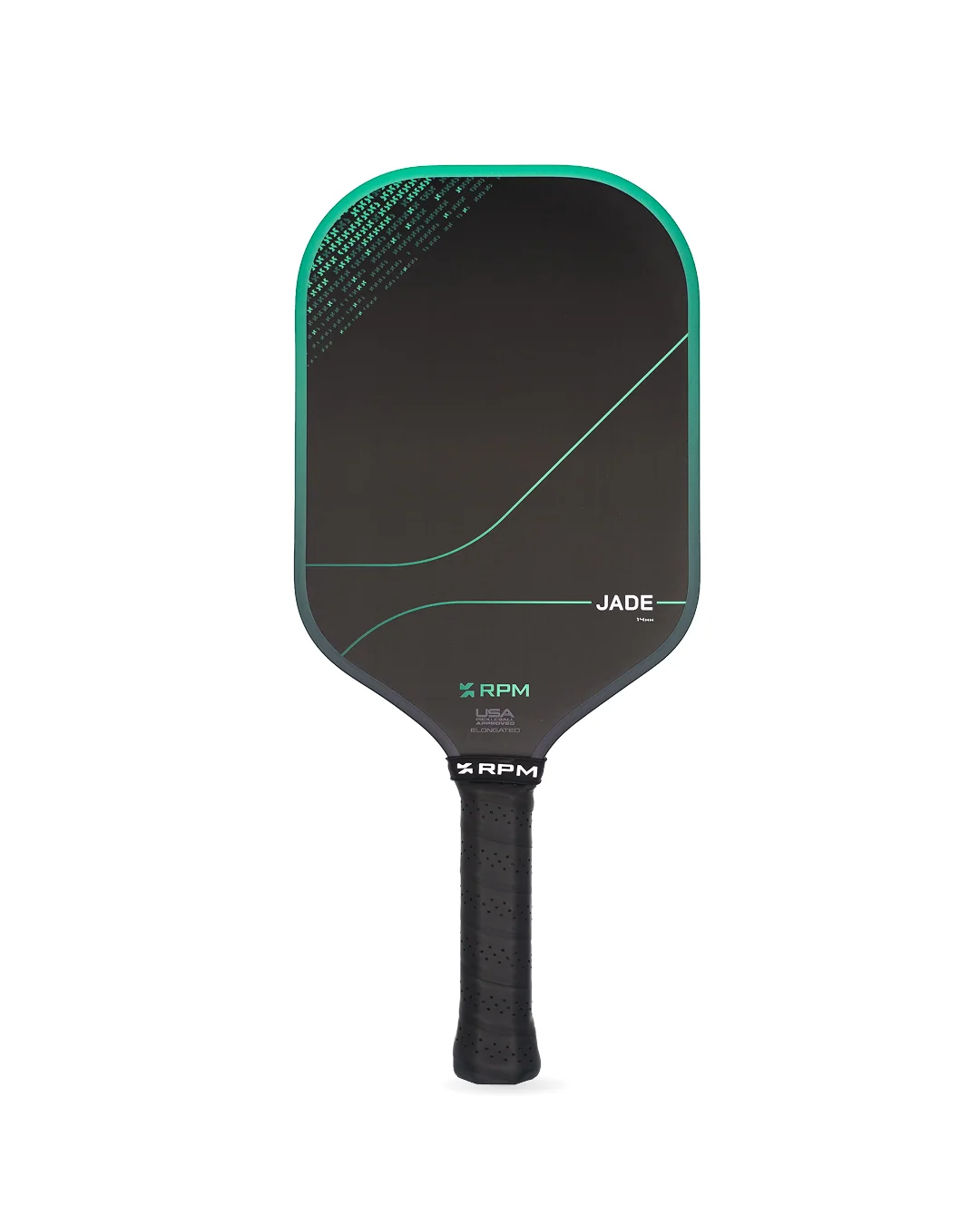
For a long time, there was a pretty obvious idea of what a pickleball paddle was supposed to look like. Basically a rectangle with rounded corners, with some variation in length, width, thickness and construction.
Then players started wanting something different.
First we saw elongated paddles become increasingly popular. Then edgeless paddles. Then paddles with holes cut into them, like the Selkirk LUXX. Then came some seriously unusual shapes, like the Combat Saber.
Now we have the quiet paddles that look like someone glued a piece of carpet to them, like the Owl Paddles!
So why are we so interested in paddles that don’t look like every other paddle?
We Like Different
I think part of it is pretty simple: different gets our attention.
Show me another paddle that looks basically identical to the 47 paddles I’ve already seen this year and I’m probably going to keep scrolling.
Show me something that looks completely bizarre and I’m going to stop.
And pickleball players seem particularly susceptible to this.
We’re constantly looking for an advantage. More reach. More spin. More control. Better hand speed. Less noise. A larger sweet spot.
If someone thinks changing the shape of the paddle might help accomplish one of those things, they’re going to try it.
But there’s another reason I think this experimentation matters.
Nobody really knows what the perfect pickleball paddle looks like yet.
What If the Shape We’ve Accepted Is Wrong?
Occasionally we see brands really experiment with the shape.
Some may try a minor shape change like the JOOLA Radius, or essentially “cutting out” a somewhat useless part of the paddle to give more hand space like the aforementioned Combat Saber.
Then there are the truly odd ones:
KOBO Pickleball released the Thunder AXE Infinity.
AlienHead has a completely bizarre shape with an off center handle and weird paddle shape.
I don’t know if these shapes are the future of pickleball or not.
But I will take a wild guess that a rectangle with rounded corners is likely NOT the most ergonomic or best possible shape for hitting a pickleball.
It’s simply the shape we’ve gotten used to.
And if some brands are willing to ask, what if we started somewhere else?
That’s a much more interesting question than making another paddle that’s 0.1 ounces lighter than the previous version.
And here’s the part I find especially interesting about these.
You can look at it and immediately think, “There’s no way that works.”
But talk to people who have actually played with some of these completely weird shapes and the reaction is often very different.
Once players spend some time with it, the unusual shape can start making more sense.
That’s important.
Because innovation doesn’t necessarily have to look obvious.
Sometimes the thing that looks wrong at first turns out to feel surprisingly right.
I have no idea whether these different shapes will become a mainstream paddle shape. They might not.
But I would much rather have a company experimenting with something like this than have every paddle manufacturer agree that we’ve already figured out the shape of a pickleball paddle.
The Weird Paddles Move the Sport Forward
This is the part I think we sometimes miss.
A paddle doesn’t have to become the next big thing to be useful.
A company can make a weird paddle that doesn’t sell particularly well, but discover something important about aerodynamics, balance, sweet-spot location or ergonomics.
Another company can take that idea and improve it.
Eventually, the original weird paddle might be forgotten while the idea it introduced becomes completely normal.
That’s how equipment evolves.
And pickleball is still young enough that we’re watching a lot of that evolution happen in real time.
Not Everything Different Is Better
Of course, there’s a catch.
Different doesn’t automatically mean better.
Sometimes different is just marketing.
A strange-looking paddle is going to get clicks. It’s going to get people talking. It’s going to stand out on social media.
Companies know this.
So I’m not convinced every unusual paddle represents some great leap forward.
But I’d still rather see manufacturers experiment than have an industry where every paddle is essentially the same shape with a different logo and paint job.
Because somewhere in all of those weird ideas is probably a genuinely better way of doing things.
And honestly, different sometimes IS better. I love Owl paddles. I know people who love their Combat Sabers. We wouldn’t have these if companies weren’t willing to shake up the status quo.
Maybe Weird Is Exactly What Pickleball Needs
I don’t know what pickleball paddles will look like ten years from now.
Maybe we’ll still be using elongated paddles and hybrid shapes.
Maybe the KOBO shape or the AlienHead shape becomes more common.
Maybe the next big thing has nothing to do with shape at all.
But I think the fact that companies are willing to ask “What if?” is a very good thing for the sport.
Because the traditional paddle shape isn’t necessarily the final answer.
It’s just the answer we’ve gotten used to.
And if somebody wants to make a paddle that looks completely ridiculous in order to find out whether it works?
I’m all for it.
Some of the weirdest paddles on the market today might be dead ends.
But one of them might also be the beginning of something.
And I think that’s worth paying attention to.